
The 45% Rule: Why Your Venue, Catering and Bar Shouldn’t Eat Your Entire Wedding Budget
If you remember nothing else from this article, remember this:
Your venue, catering, and bar should ideally stay around 45% of your total wedding budget.
When that number creeps to 55%, 60%, or higher, something else has to give — and it’s usually the design, the atmosphere, or the experience.
As a Michigan wedding planner, I’ve seen this pattern more times than I can count. Couples fall in love with a venue, stretch their budget to secure it, and then realize there’s very little left to actually make the space feel like their wedding.
Let’s break this down.
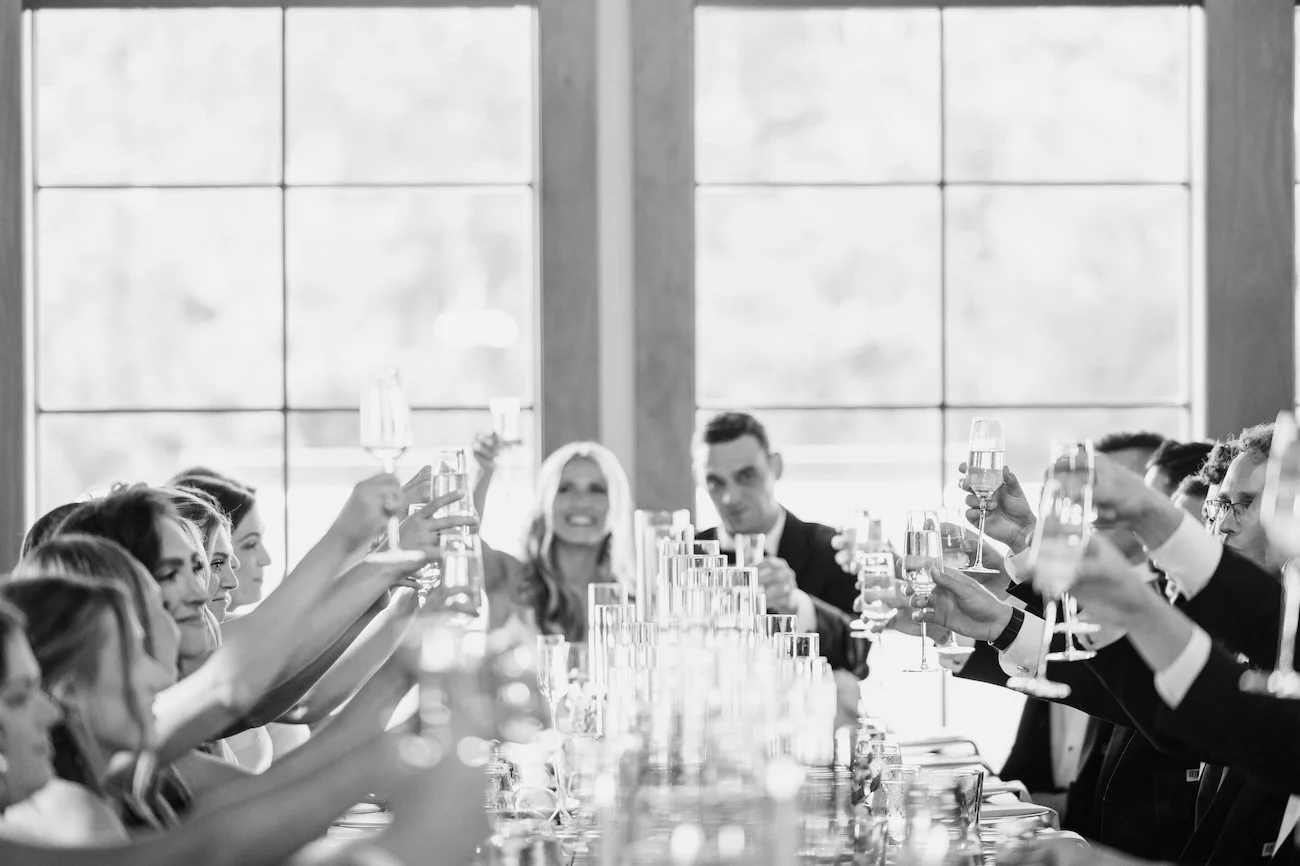
Photography by Jillian Photography
Why the 45% Rule Matters
Your venue, catering, and bar are foundational expenses. They’re necessary. They’re important.
But they’re also structural — not transformational.
A stunning venue with no layered design, intentional lighting, thoughtful rentals, or custom details can feel surprisingly flat. And once your budget is heavily tied up in food and space, it becomes very difficult to elevate the atmosphere.
Here’s a simple example:
If your total budget is $100,000
Venue + catering + bar should ideally land around $45,000
That leaves $55,000 for:
Photography + video
Florals
Rentals
Lighting
Entertainment
Planner support
Attire
Stationery
Transportation
Miscellaneous details
When that same couple spends $65,000 on venue, catering, and bar, they now only have $35,000 left to build the experience.
That’s where stress starts.
What Happens When You Overspend on Your Venue
I’ve watched this play out in real time.
Couples say:
“We’ll figure out the decor later.”
“We don’t need much — the venue is beautiful.”
“We can scale back florals.”
And then later:
The reception feels under-layered.
Tables feel sparse.
Lighting is basic instead of intentional.
The space photographs darker or flatter than expected.
They realize they don’t have room for the live band they wanted.
You end up with a beautiful room… that doesn’t feel fully realized.
A venue is a canvas. It is not the finished painting.
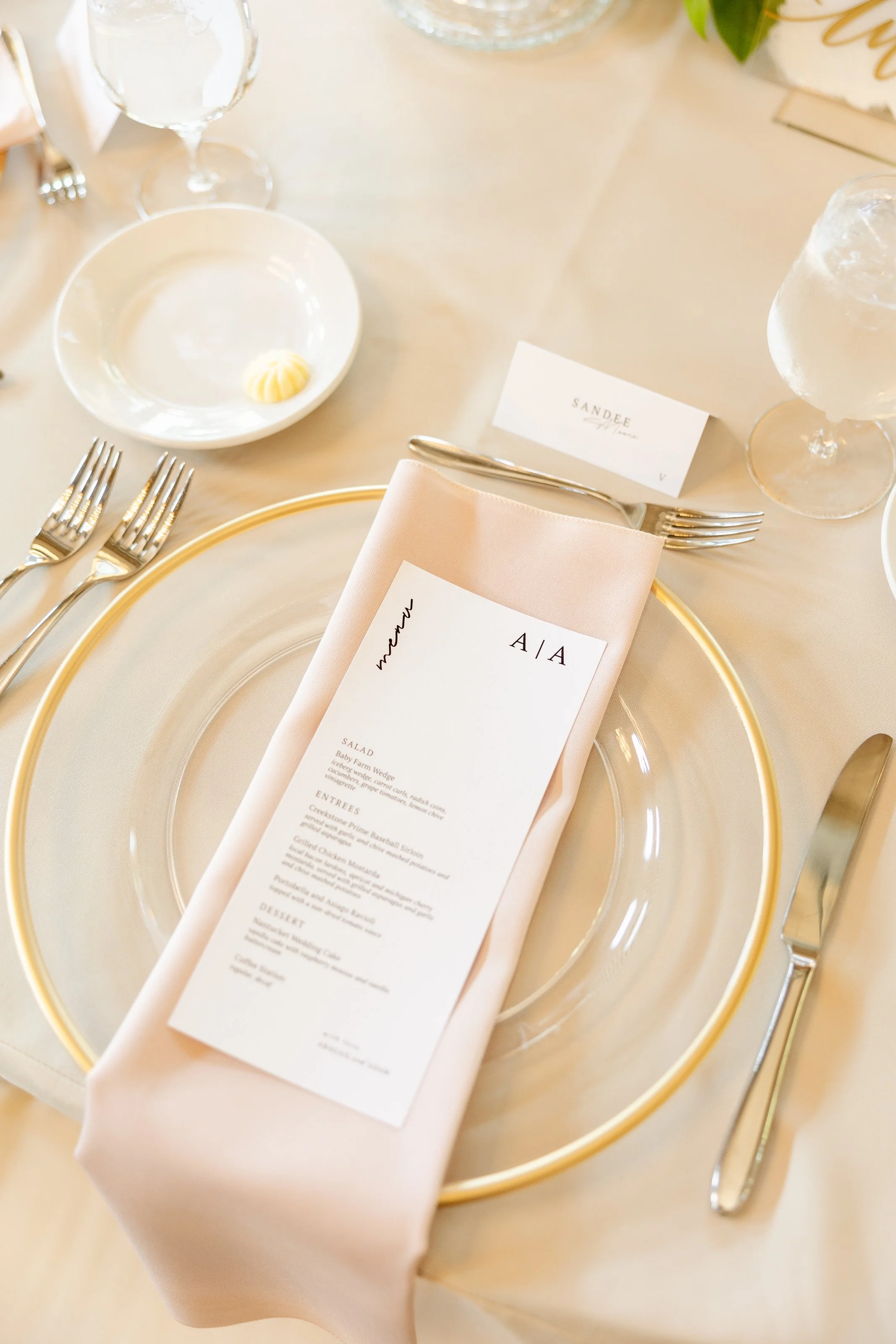
Photography by Jillian Photography
The Emotional Trap of Booking a Venue First
Most couples book their venue before building a complete budget framework.
It makes sense. Venues book quickly. It feels like progress.
But when you book based on emotion without understanding the ripple effect, you lose flexibility later.
Before you sign a venue contract, ask:
What is our realistic total investment range?
What type of experience do we want to create?
Are we prioritizing guest experience, design, food, entertainment?
How important is aesthetic layering and custom elements to us?
If you care deeply about design, flow, lighting, and atmosphere — you need to protect that portion of your budget from the beginning.
Where Design Actually Lives in the Budget
Design isn’t just flowers.
Design lives in:
Linen upgrades
Charger plates
Flatware
Custom bars
Lounge seating
Lighting
Draping
Floral installations
Statement ceremony structures
Thoughtful signage
Intentional layout planning
Those details require margin.
When 60–70% of your budget is already committed, those upgrades become painful decisions instead of intentional choices.
Explore partial wedding planning here.
How to Build Your Budget Before Booking Your Venue
Here’s a better approach:
Determine your realistic total investment.
Allocate 45% toward venue, catering, and bar.
Map out approximate ranges for photography, entertainment, and planning.
Reserve space for rentals and design enhancements.
Then begin venue tours with clarity.
When you walk into a venue knowing what you can comfortably spend, you avoid falling in love with something that quietly restricts everything else.
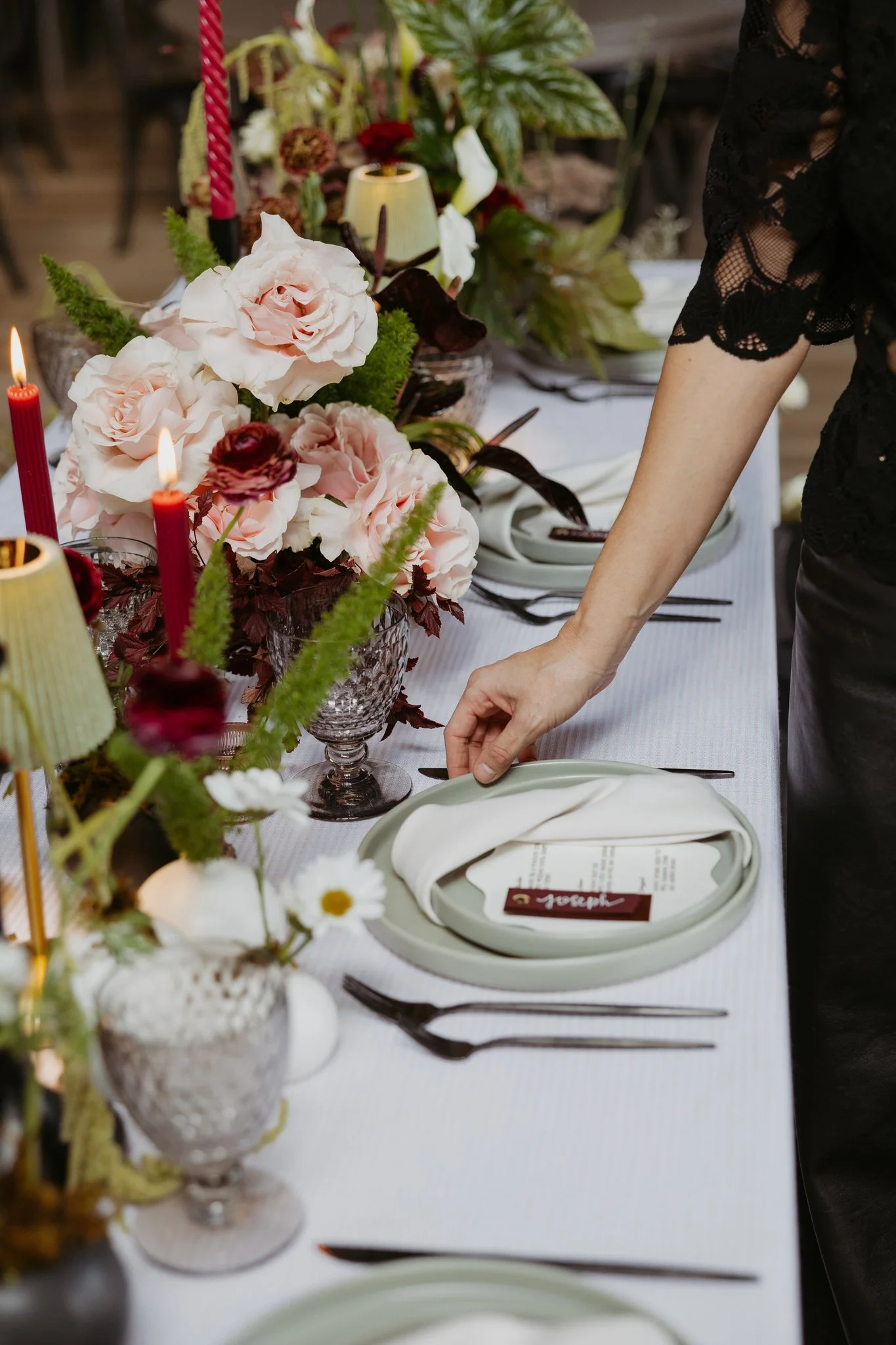
Photography via Amelie Ferdais
Where Partial Planning Comes In
This is exactly why so many couples choose partial planning or what I call a planning partnership.
You don’t necessarily need full-service from day one.
But you do need structure.
Partial planning allows you to:
Build a smart budget framework early
Avoid costly allocation mistakes
Protect your design vision
Make strategic vendor decisions
Create a timeline that supports your priorities
It’s strategic involvement without starting from scratch.
And it prevents that sinking feeling six months in when you realize you’ve boxed yourself into a corner.
A Beautiful Venue Isn’t Enough
I love a stunning Michigan venue as much as anyone.
But the weddings people remember?
The ones that feel layered, intentional, warm, and immersive?
Those didn’t happen by accident.
They happened because the budget was structured with the full experience in mind.
If you’re early in the planning process, protect your flexibility now.
Your future self will thank you.